 +91 8309329496

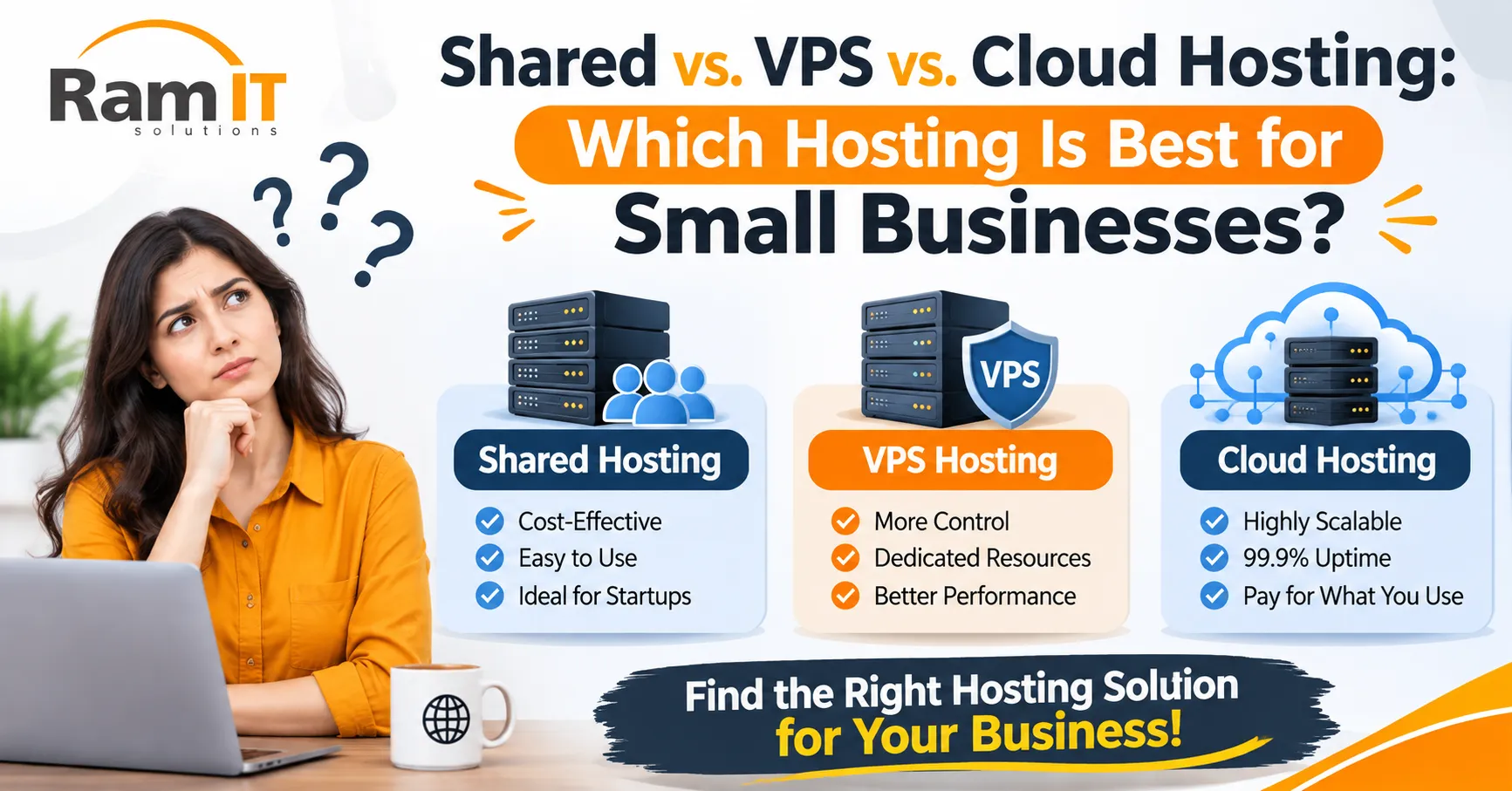
Choosing between Shared vs. VPS vs. Cloud Hosting is one of the first technical decisions every small business owner faces. Your hosting plan affects how fast your website loads, how safe your customer data stays, and how well your site handles sudden traffic. A wrong choice can lead to slow pages, lost sales, and unplanned downtime. This guide explains each hosting type in plain language, compares them on the points that matter, and helps you pick the plan that fits your budget and growth plans.
What Is Web Hosting?
Web hosting is the service that stores your website files on a server and delivers them to visitors when they type your domain name. Every website needs hosting, whether it is a simple business profile, an online store, or a booking portal.
The three most common options for small businesses are shared hosting, VPS hosting, and cloud hosting. They differ in how server resources are divided, how much control you get, and how much you pay each month.
What Is Shared Hosting?
In shared hosting, many websites live on one server and share its resources, including CPU, RAM, and storage. Think of it like renting a flat in an apartment building. You have your own space, but the building’s water, electricity, and lift are used by everyone.
Advantages of shared hosting:
- Lowest price, often starting at a few hundred rupees per month
- Easy setup with a control panel like cPanel
- No technical skills needed
- Server maintenance handled by the provider
Limitations of shared hosting:
- Speed can drop if a neighbouring site uses too many resources
- Limited control over server settings
- Lower security isolation
- Not suited for heavy traffic
Shared hosting works well for new businesses, personal portfolios, small blogs, and simple brochure websites that receive modest traffic.
What Is VPS Hosting?
VPS stands for Virtual Private Server. A single physical server is divided into several virtual servers, and each one has its own dedicated share of CPU, RAM, and storage. Using the same comparison, VPS is like owning a independent flat in a building where your resources are reserved only for you.
Advantages of VPS hosting:
- Dedicated resources that stay stable
- Better speed and performance than shared hosting
- Root access for custom software and settings
- Stronger security because your site is isolated
Limitations of VPS hosting:
- Costs more than shared plans
- Needs some technical knowledge unless you choose a managed plan
- Resources are fixed, so upgrades need a plan change
VPS suits growing businesses, online stores with steady orders, and websites that run custom applications or receive a few thousand visitors every day.
What Is Cloud Hosting?
Cloud hosting uses a network of connected servers instead of a single machine. Your website draws resources from the whole network. If one server has a problem, another takes over without interrupting your site. This is like having a pipeline of water from many tanks instead of one.
Advantages of cloud hosting:
- High uptime because of server redundancy
- Easy scaling during traffic spikes
- Pay for what you use in many plans
- Strong performance across locations
Limitations of cloud hosting:
- Pricing can vary and may be harder to predict
- Some plans need technical setup
- Costs can rise if traffic grows quickly
Cloud hosting is a strong choice for e-commerce stores, booking platforms, news portals, and any business that expects traffic to rise during sales or campaigns.
Shared vs. VPS vs. Cloud Hosting: Quick Comparison
| Feature | Shared | VPS | Cloud |
| Price | Lowest | Medium | Medium to high |
| Speed | Basic | Good | Very good |
| Security | Basic | Strong | Strong |
| Scalability | Limited | Moderate | Excellent |
| Uptime | Good | Very good | Excellent |
| Technical skill | Low | Medium | Medium |
| Best for | Small sites | Growing sites | High traffic sites |
Performance and Speed
Page speed affects both user experience and search rankings. On shared hosting, speed depends on what other websites on the server are doing. A traffic spike on one site can slow down others.
VPS gives you reserved resources, so your site performs the same whether the neighbours are busy or quiet. Cloud hosting goes a step further by spreading the load across many servers, which keeps pages quick even when visitors increase suddenly.
If your website is a key sales channel, investing in VPS or cloud hosting usually pays for itself through better conversions.
Security Differences
Security matters most when you collect names, phone numbers, or payment details. Shared hosting places many sites on the same server, so a weakness in one account can sometimes affect others. Good providers add firewalls and malware scanning, but isolation remains limited.
VPS and cloud hosting separate your data more strongly. They also allow you to install custom security tools, set firewall rules, and schedule automatic backups. Whatever plan you pick, make sure it includes an SSL certificate, daily backups, and malware protection.
Scalability and Growth
Think about where your business will be in two years. If you expect steady growth, choose a plan that can grow with you.
- Shared hosting allows only small upgrades, and most businesses eventually need to migrate.
- VPS lets you increase resources, though this may require a short setup process.
- Cloud hosting scales almost instantly, which is helpful for seasonal sales, festival offers, and campaign launches.
Moving between hosting types later is possible, but it takes time and planning. Choosing a flexible plan from the start saves effort.
Cost Considerations
Price should be viewed alongside value. A low cost plan that causes downtime during a sale can cost you far more in lost orders than a higher plan would have cost in fees.
As a rough guide, shared hosting suits budgets that need a minimum monthly expense. VPS fits businesses ready to spend more for reliability. Cloud hosting suits those who value uptime and flexibility and are comfortable with usage based billing. Always check renewal rates, since many providers offer low first year prices that rise later.
Which Hosting Is Best for Your Business?
Use this simple guide:
- Choose shared hosting if you are launching a new website, have limited budget, and expect low traffic.
- Choose VPS hosting if your site is growing, handles customer data, or runs custom software.
- Choose cloud hosting if you run an online store, expect traffic spikes, or cannot afford downtime.
Ask yourself four questions: How many visitors do I expect? Do I collect customer or payment data? How costly is one hour of downtime? Do I need to scale quickly? Your answers will point to the right plan.
Essential Tips to Consider Before Buying
- Check uptime guarantees, ideally 99.9 percent or higher
- Confirm that backups are automatic and easy to restore
- Look for 24/7 support through chat, phone, or email
- Ask about server locations close to your customers for faster loading
- Read the renewal price and refund policy
- Make sure an SSL certificate is included
Conclusion
The right choice among Shared vs. VPS vs. Cloud Hosting depends on your website traffic, budget, and future growth plans. Shared hosting is a great starting point for small websites, VPS hosting offers better control and stability for growing businesses, while cloud hosting provides greater scalability, flexibility, and reliability for high-traffic websites.
Looking for the right hosting solution? Explore Domain and Hosting Services in Hyderabad with Ramit Solutions and get expert guidance on choosing and setting up the right hosting plan.
From domain registration to hosting setup and ongoing support, Ramit Solutions helps keep your website fast, secure, and ready to grow.