 +91 8309329496

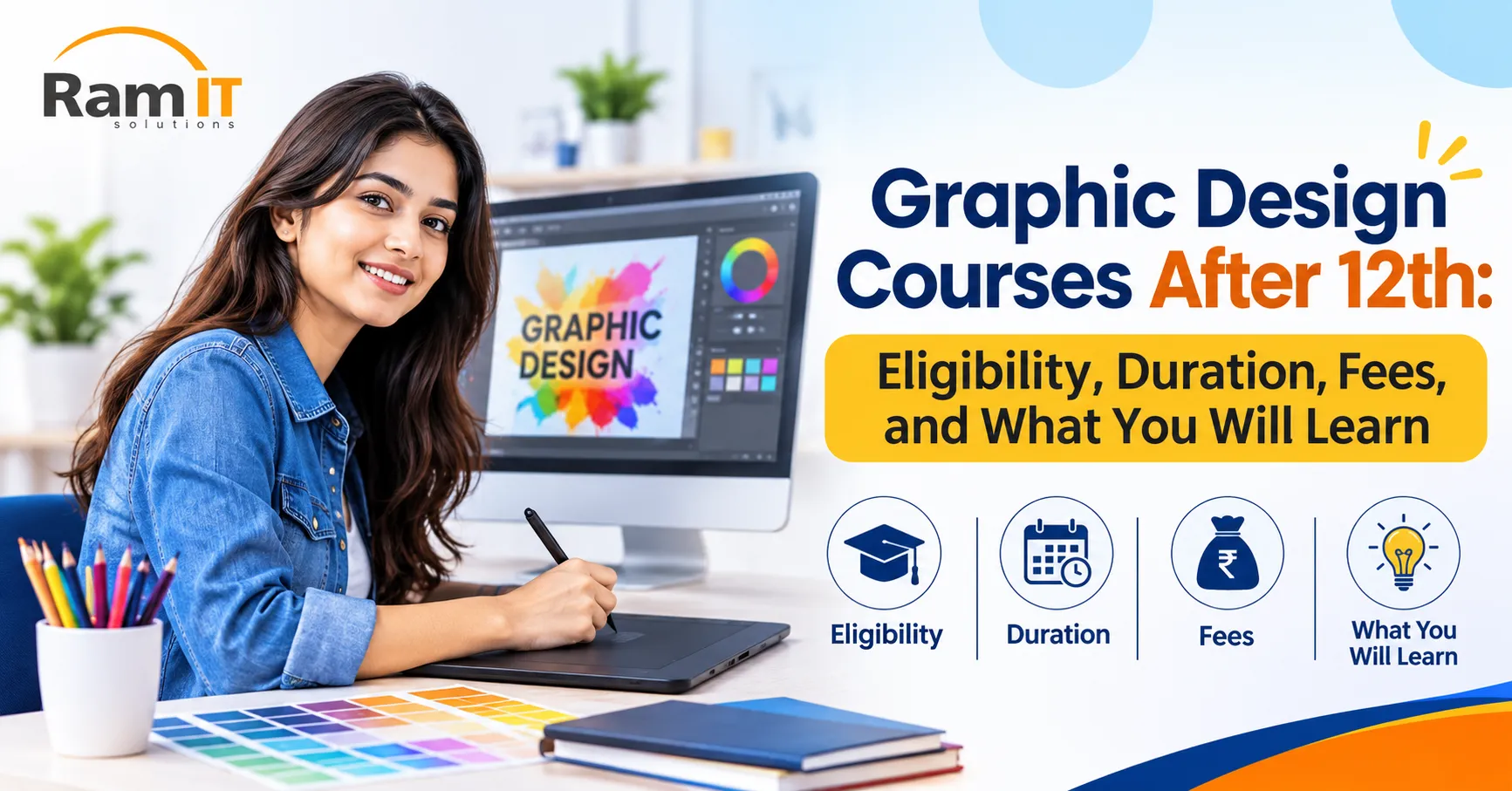
Choosing a career after 12th can feel confusing, especially if you enjoy art, creativity, and technology more than traditional subjects. Graphic design is one of the few fields where creative skills can turn into a stable income, and you do not need an engineering or medical degree to enter it.
This guide covers the main graphic design courses available after 12th, who can apply, how long each course takes, what it costs, what you will learn, and the careers it leads to.
What Is Graphic Design?
Graphic design is the practice of communicating ideas through visuals. Designers create logos, social media posts, brochures, packaging, websites, app screens, posters, and advertisements. Every brand you see around you, from a local bakery to a global company, depends on graphic designers to look professional and attract customers.
The demand is steady because every business needs visual content. Companies hire designers full time, and many also work with freelancers on a project basis.
Types of Graphic Design Courses After 12th
You can choose from several routes depending on your budget, time, and career goals.
| Course Type | Duration | Approx. Fees (₹) |
| Certificate Course | 3 to 6 months | 8,000 to 30,000 |
| Diploma in Graphic Design | 6 months to 2 years | 25,000 to 1,20,000 |
| Advanced Diploma | 1 to 2 years | 50,000 to 1,50,000 |
| Bachelor of Design (B.Des) | 4 years | 1,50,000 to 10,00,000+ |
| BA or BSc in Graphic Design or Multimedia | 3 years | 60,000 to 4,00,000 |
| Online Courses | 1 to 6 months | 2,000 to 25,000 |
Fees depend on the institute, city, faculty, and the software or hardware included. Government and aided colleges charge less, while private design schools and universities charge more.
Graphic Design Course Eligibility Criteria
Most graphic design courses are open to students from any stream, whether Science, Commerce, or Arts. The basic requirements are:
- Certificate and diploma courses: Passing 12th from a recognized board. Some institutes accept students even without a final result.
- Bachelor degree programs: At least 50% marks in 12th is common, though top institutes may ask for more.
- B.Des admissions: Many colleges conduct entrance exams such as UCEED, NID DAT, NIFT, and others. These tests check drawing, visualization, logical thinking, and creativity.
- Portfolio and interview: Some institutes ask for a small portfolio or a studio test.
You do not need to be a skilled artist to begin. Basic creativity, patience, and willingness to practice matter more than drawing talent. Most skills are learned in class.
Graphic Design Course Duration 2027
Short term courses (3 to 6 months): Good for students who want quick, job-focused training. They cover core software and basic design principles.
Diploma programs (6 months to 2 years): These go deeper into design theory, branding, typography, and portfolio building. They suit students who want practical skills without spending four years.
Degree programs (3 to 4 years): Best for those who want a formal qualification, wide exposure, internships, and higher study options such as an M.Des.
If your goal is to start earning early, a diploma or certificate with strong practical training is a sensible choice. If you want to work in design leadership, teaching, or study abroad, a degree adds value.
Graphic Design Fees 2027: What to Expect
Course fees in India vary widely:
- Short certificate courses usually cost ₹8,000 to ₹30,000.
- Diploma programs range from ₹25,000 to ₹1,50,000.
- Degree programs can cost from ₹1,50,000 to over ₹10,00,000 in total.
Also budget for extra costs such as a laptop or tablet, software subscriptions, printing, project materials, and exam fees. Many institutes offer student discounts on design tools, so ask about it during admission.
What You Will Learn
A good graphic design course combines creative theory with hands-on software training. Here is what most programs include.
Design Fundamentals
You learn the building blocks of every layout: color theory, typography, composition, balance, contrast, spacing, and visual hierarchy. These principles stay useful no matter which software or trend changes.
Design Software
Most courses train you in industry tools such as:
- Adobe Photoshop for photo editing and digital artwork
- Adobe Illustrator for logos, icons, and vector graphics
- Adobe InDesign for brochures, magazines, and print layouts
- CorelDRAW for print and signage work
- Figma for UI and web design
- Canva for quick social media content
Branding and Logo Design
You learn how to build a brand identity from scratch, including logo creation, color palettes, font pairing, and brand guidelines.
Print and Packaging Design
This covers visiting cards, flyers, banners, catalogs, product labels, and packaging layouts, along with print file preparation and color modes.
Social Media and Digital Design
You create posts, ad creatives, thumbnails, email graphics, and web banners that match platform sizes and audience behavior.
UI and UX Basics
Many modern programs introduce user interface design, wireframing, and prototyping. These skills open doors to app and website design roles.
Motion Graphics and Video Basics
Some courses add short animation, reels, and simple video editing using After Effects or similar tools.
Portfolio Building
A portfolio is your most important asset when applying for jobs. Quality institutes help you build 8 to 12 polished projects that show your range.
Career Options After a Graphic Design Course
Once you complete your training, you can work in roles such as:
- Graphic Designer
- Visual Designer
- Brand Identity Designer
- Packaging Designer
- UI Designer
- Social Media Designer
- Motion Graphics Artist
- Art Director
- Freelance Designer
Employers include advertising agencies, digital marketing firms, publishing houses, print studios, e-commerce companies, startups, and in-house design teams.
Salary Expectations After Completing a Graphic Design Course
Entry level designers in India typically earn ₹15,000 to ₹30,000 per month. With two to three years of experience and a strong portfolio, salaries often reach ₹40,000 to ₹70,000 per month. Senior designers and art directors in larger companies can earn significantly more. Freelancers set their own rates based on skill and client base.
How to Choose the Right Graphic Design Course
Not every institute delivers the same quality. Check these points before you enroll.
- Curriculum: Make sure it covers current tools and real client style projects, not just theory.
- Faculty: Look for trainers who work or have worked in the industry.
- Practical hours: More lab time and live projects mean better skills.
- Portfolio support: Ask how many projects you will complete by the end.
- Placement help: Check whether the institute offers internships, interview preparation, or job referrals.
- Batch size: Smaller batches give you more personal feedback.
- Reviews and past students: Speak with former students if possible.
- Certification: Confirm that the certificate is recognized by employers.
Skills You Need to Succeed
Technical training is only half the picture. Strong designers also develop:
- A good eye for detail
- Willingness to take feedback
- Time management for deadlines
- Basic communication skills to understand client needs
- Curiosity about trends and new tools
Practice daily, even for 30 minutes. Recreate posters you like, redesign logos of local shops, and share your work online. Consistency builds skill faster than any single course.
Is Graphic Design a Good Career After 12th?
Yes, for students who enjoy creative work. The field allows early entry, flexible work styles, remote jobs, and freelance income. You can start with a short course, begin working, and upgrade your skills over time. Unlike many careers, your portfolio often matters more than your marks.
Conclusion
Graphic design courses after 12th are open to students from every stream and range from short certificates to full degrees. Choosing the right graphic design course depends on your budget, available time, and career plans. Whichever route you take, focus on learning core design principles, mastering software, and building a strong portfolio.
If you want hands-on training that prepares you for real projects, Ramit Solutions can guide you. Our practical approach focuses on live assignments, tool mastery, and portfolio development so you are ready for work from day one.
Take the first step toward a creative career. Enroll in a professional Graphic design Course with Ramit Solutions today.